Complexity of breast MRI assessment
A single breast MRI examination can contain hundreds of images across multiple sequences and contrast phases, requiring careful review to identify abnormalities and assess their clinical significance.

InfiWave Studio
InfiWave Studio brings artificial intelligence and human expertise together to advance the way MRI data are assessed, annotated, and managed across clinical and research environments.

Breast MRI is among the most sensitive imaging methods for breast cancer detection, but its complexity makes interpretation demanding. As imaging demand continues to grow, radiology services face increasing pressure to maintain timely and consistent assessments. Developing reliable AI systems to assist radiologists in breast MRI assessment also depends on high-quality, expertly annotated imaging data, yet the availability of sufficiently large, diverse, and reliable datasets remains limited.
A single breast MRI examination can contain hundreds of images across multiple sequences and contrast phases, requiring careful review to identify abnormalities and assess their clinical significance.
Imaging demand continues to increase, often outpacing the growth of the radiology workforce. This places additional pressure on radiologists and healthcare systems to manage expanding workloads while maintaining timely and consistent assessments.
Annotating complex MRI data requires specialized medical expertise and considerable time. Differences in how experts identify and delineate findings can introduce variability, making the creation of accurate, consistent, and reliable datasets increasingly challenging.
Imaging data and associated information are often distributed across separate sources and organized differently between institutions, making data integration, consolidation, and management complex and time-consuming.
Advancing AI in medical imaging requires more than sophisticated algorithms. It also depends on reliable data, expert oversight, and tools that bring these elements together in clinical and research environments. InfiWave Studio addresses these complementary needs through two specialized modules designed to support clinical decision-making and facilitate the creation of high-quality annotated imaging data.
Designed as an AI-powered second reader and potential triage aid, InfiWave Studio assists radiologists in breast MRI assessment, helping identify concerning findings, evaluate malignancy risk, and prioritize cases that may require closer attention. By incorporating breast density assessment and dielectric tissue characterization, the system provides additional information to support a more comprehensive evaluation of the patient's current condition.
About the Clinical Decision Support moduleFacilitate faster, more efficient medical image annotation, making it easier for experts to contribute to high-quality imaging datasets. By embedding annotations directly within DICOM, the module reduces data fragmentation and simplifies data management across institutions.
About the Annotation moduleInfiWave Studio addresses two interconnected needs in medical imaging: supporting radiologists in complex clinical assessments and facilitating expert involvement in creating the high-quality imaging data essential for developing reliable AI systems.
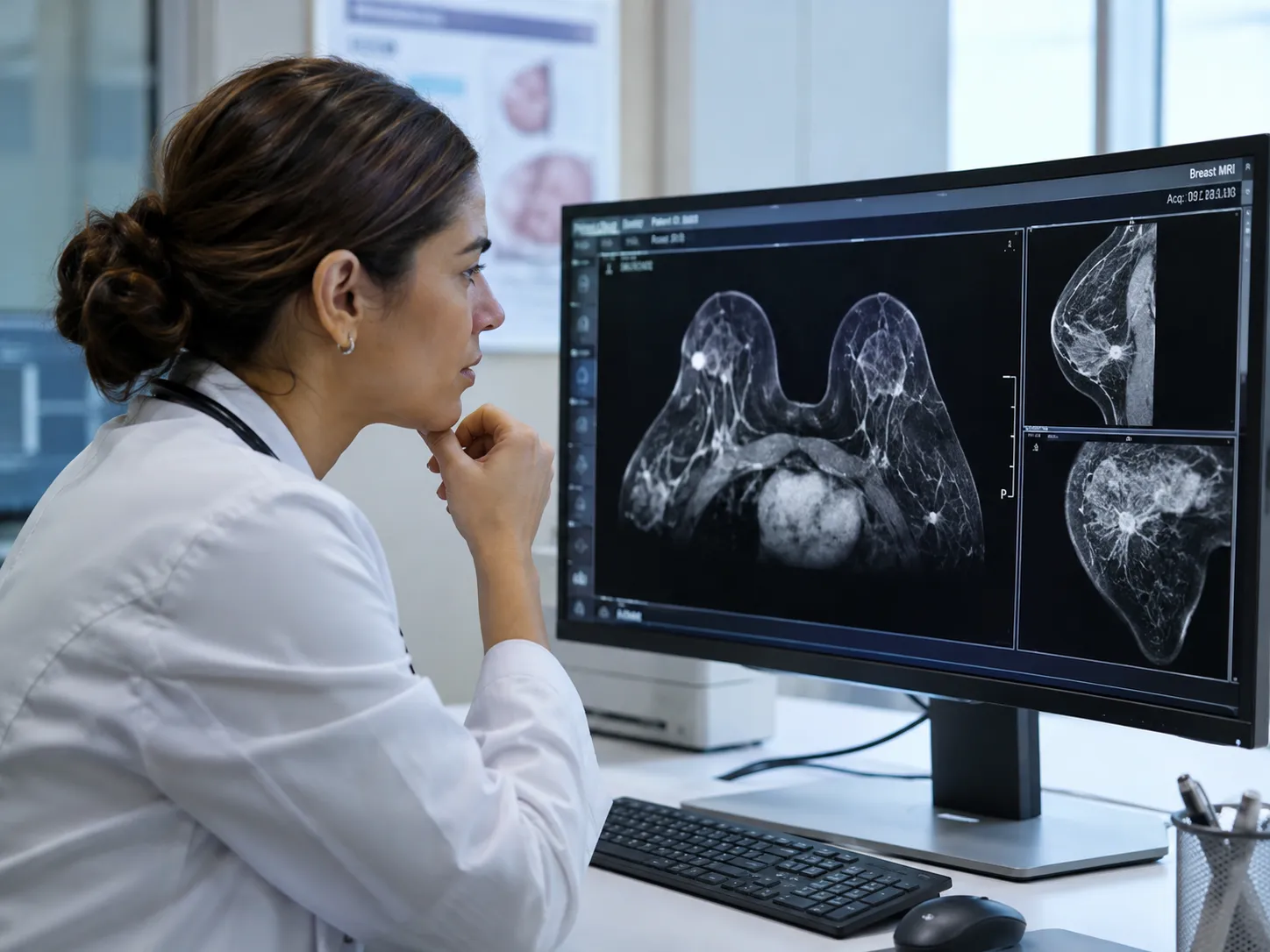
As an AI-powered second reader, InfiWave Studio provides additional information to complement radiologists' clinical judgment, aiming to reduce uncertainty, promote consistency, and support more confident, informed clinical decision-making.
By accelerating and simplifying medical image annotation, InfiWave Studio makes it easier for specialists to contribute their expertise to the creation of high-quality datasets. Its DICOM-native environment supports collaborative review, annotation traceability, and more efficient data management across different institutional workflows.
InfiWave Diagnostics has reached agreements with five hospitals in Türkiye to conduct prospective clinical evaluations of InfiWave Studio.
These evaluations will assess the platform's performance in real-world hospital environments, its integration into routine clinical workflows, and its potential contribution to radiologists' everyday practice. The resulting clinical data will also support further refinement and validation of the AI models.
Whether you're interested in how InfiWave Studio can support your clinical or research workflows, exploring collaboration opportunities, or simply looking to learn more, we'd be happy to hear from you.